
Why spring is the right time for a home audit
Winter puts real stress on a house. Freeze-thaw cycles open gaps in caulk and masonry, ice and debris fill gutters, and heating systems run hard for months without inspection. By the time temperatures stabilize in spring, many small problems are already in place and waiting to grow.
The good news is that most of these issues are cheap to fix when caught early. A cracked caulk line costs a few dollars and twenty minutes to repair. Left alone through a wet spring, it can let moisture into wall cavities and produce rot or mold that costs far more to address. The same logic applies across the checklist below.
This walkthrough focuses on tasks that families routinely skip, either because they are not visible from the ground or because they seem minor. None of the items below require specialized skills or expensive tools. For anything that involves electrical panels, gas lines, or structural concerns, always consult a licensed contractor and verify whether local permits are required before doing any work.
If you are also planning exterior improvements once the maintenance is done, see our guide to low-cost front yard updates for ideas that work alongside a solid maintenance foundation.
Know when to call a professional
Tasks involving the electrical panel, gas appliances, structural framing, or work done at significant heights carry real safety risks and may require permits or licensed trades in your area. This checklist covers standard homeowner maintenance only. If you find signs of structural damage, active leaks near electrical components, or anything you cannot safely assess yourself, stop and contact a qualified contractor. Check with your local building department to confirm what work in your area requires a permit or inspection.
What you will need
Gather these items before your walkthrough so you are not stopping mid-task to make a hardware run.
Ladder (6-foot or taller)
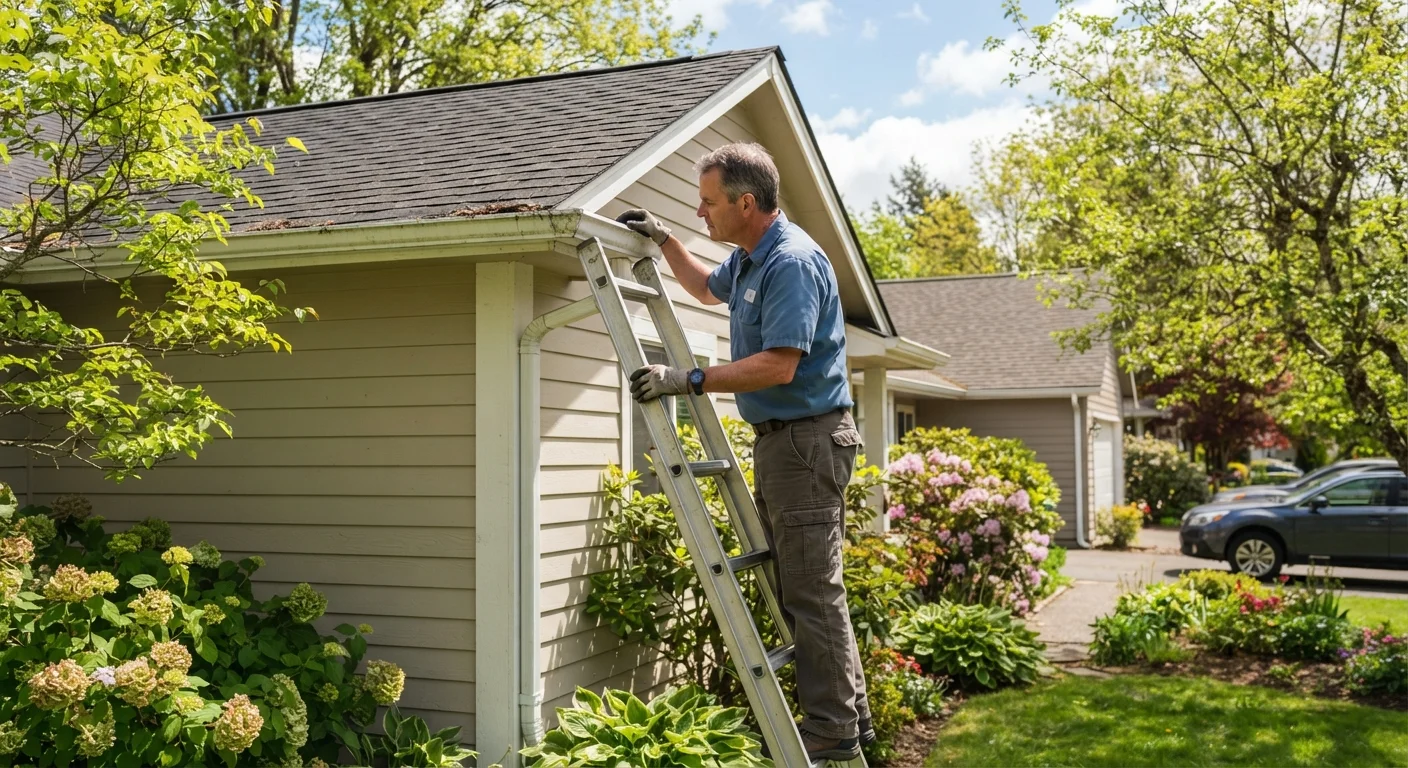
Needed to inspect and clear gutters safely.
Binoculars
Allows a safe ground-level inspection of the roof without climbing.
Garden hose with adjustable nozzle
Used to flush gutters, test hose bibs, and rinse the condenser unit.
Caulk gun and exterior-grade caulk
Needed to reseal any cracked or missing caulk lines around windows and trim.
Replacement HVAC filter
Swapped in during the HVAC check; buy the correct size for your system before you start.
Dryer vent cleaning brush kit
Used to remove lint from the full length of the dryer duct.
Flathead and Phillips screwdrivers
Useful for tightening deck fasteners, removing vent covers, and other minor fixes.
Flashlight or headlamp
Helpful for inspecting crawl spaces, under sinks, and dark corners of the basement.
The full spring checklist
Work through these groups in order. The exterior items are best done on a dry day with good visibility. Interior tasks can be completed any time.
Exterior and roof
HVAC and ventilation
Safety systems
Interior and windows
Staying current with seasonal home tasks connects directly to broader financial health. The annual financial checkup guide is worth pairing with this list, since home insurance coverage and maintenance records belong in the same yearly review.
A note on drafts and sealing work
Spring is also the right time to check whether any air sealing work done before winter is still holding. Caulk and weatherstripping around windows and doors can shift or crack after a cold season. Run your hand along frames on a breezy day to feel for air movement, or hold a piece of tissue near the edges to check for pull.
For a full guide to locating and sealing those leaks, see our guide to sealing drafty windows and doors. Addressing gaps now, before summer heat arrives, also keeps cooling costs down.