What you are actually comparing
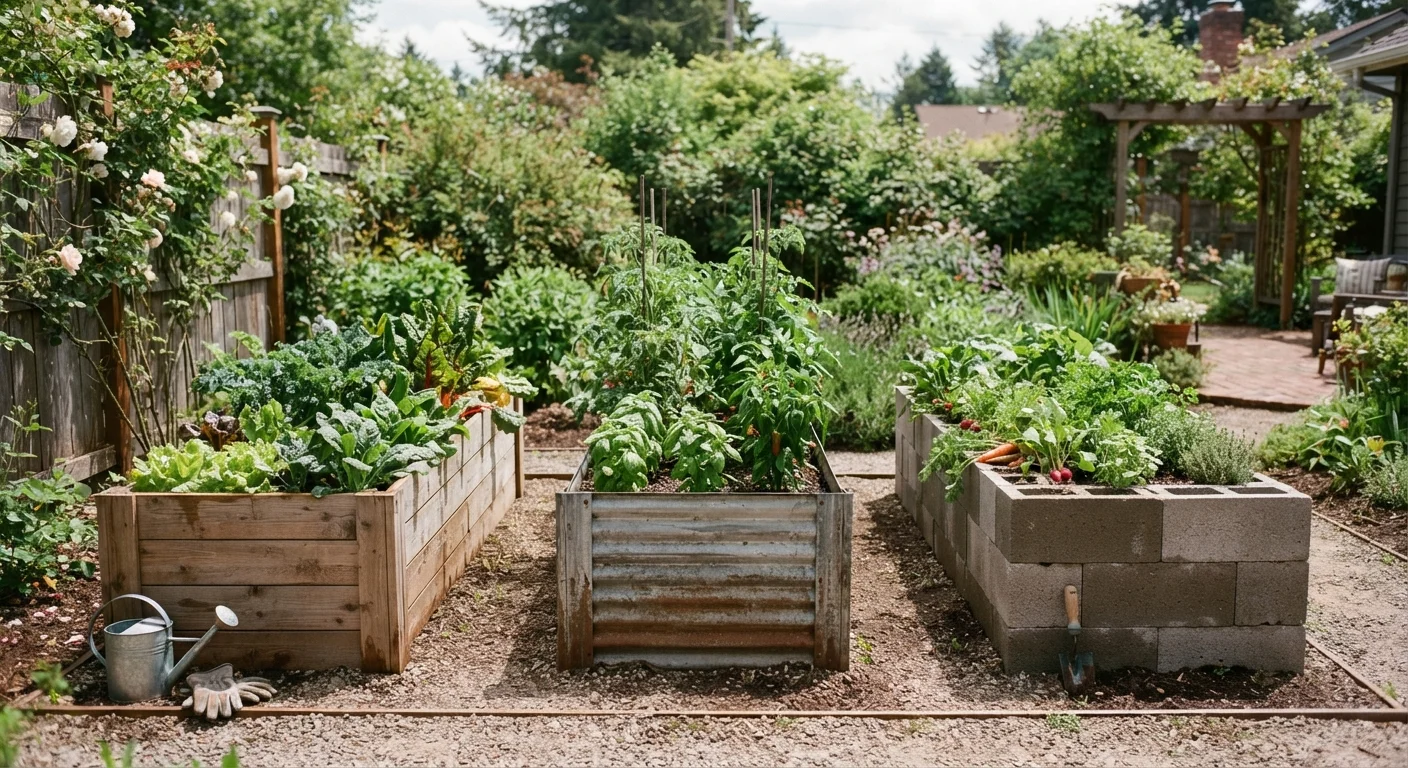
A raised garden bed is a contained growing area filled with soil you control, built above the native ground. The material you choose affects how long the bed lasts, how much it costs to build, how warm the soil gets, and how much labor goes into construction. Wood, galvanized steel, and concrete blocks are the three materials families use most often. Each one involves real trade-offs worth understanding before you spend anything.
For context on what to grow once your bed is built, see our guide on seed starting versus buying transplants to plan your planting budget alongside your build budget.
Wood: low cost, natural look, limited lifespan
Untreated lumber is the most common starting point because it is inexpensive, easy to cut, and available at any home center. Cedar and redwood are the preferred species because their natural oils slow decay, giving a bed a lifespan of roughly 10 to 15 years under typical conditions. Douglas fir and pine are cheaper but may need replacement in 5 to 7 years.
Pressure-treated lumber marked "ground contact" (labeled UC4B or higher) lasts longer, and research from the USDA and university extension programs indicates that modern alkaline copper quaternary (ACQ) and copper azole (CA) treatments do not leach harmful levels of copper into food crops under normal garden conditions. That said, some gardeners prefer to avoid treated wood near edibles as a personal precaution, which is a reasonable choice.
Construction requires basic tools: a saw, a drill, and screws or corner brackets. A 4x8-foot bed can be assembled in under two hours. The main cost variable is lumber species and current lumber prices, both of which fluctuate.
Choose the right wood species from the start
Cedar and redwood cost more per board than pine, but their natural decay resistance means you will replace them far less often. Over a 15-year period, spending more on cedar once typically costs less than rebuilding a pine bed twice. If cost is a constraint today, pine is fine as a starting point, but budget for replacement in 5 to 7 years.
Galvanized steel: durable, modern, worth the upfront cost
Galvanized steel beds are coated with zinc to resist rust and corrosion. Many manufacturers sell them as corrugated panel kits that bolt together without cutting. Under normal use, a galvanized steel bed can last 20 or more years with no maintenance beyond occasional cleaning.
The main concern gardeners raise is zinc leaching. The zinc coating on galvanized steel is stable and does not leach at levels considered hazardous to vegetables or humans under normal garden conditions, according to soil science literature. The beds become a concern mainly in highly acidic soils (below pH 5.5), where metal corrosion accelerates. Standard garden soil in the neutral range poses no practical risk.
The practical drawback is heat. Metal conducts and retains heat, so soil in a steel bed can run several degrees warmer than soil in a wood or block bed on hot summer days. This can benefit spring planting but may stress cool-season crops like lettuce or spinach in mid-summer. Placing the bed where afternoon shade is available, or lining the interior walls with burlap, reduces the effect.
| Wood | Galvanized steel | Concrete blocks | |
|---|---|---|---|
| Typical lifespan | 5 to 15 years (species-dependent) | 20 or more years | Indefinite |
| Upfront cost | Low to moderate | Moderate to high | Moderate (blocks are cheap; labor is heavy) |
| Tools required | Saw, drill, screws | Wrench or drill (kit hardware) | Level, rubber mallet |
| Soil heat retention | Low to moderate | High (conducts heat) | Moderate |
| Portability | Good (disassembles easily) | Good (bolt-together kits) | Poor (very heavy) |
| pH effect on soil | Negligible | Negligible (stable zinc coating) | Slight alkaline effect over time |
Concrete blocks: permanent, tool-free, heavy
Standard concrete blocks (also called CMUs, or concrete masonry units) stack without mortar for a garden bed. No tools are required beyond a level and a rubber mallet. A single course of standard 8x8x16-inch blocks stacked two high gives a bed wall about 16 inches tall, which is sufficient for most vegetables.
The durability is essentially unlimited. Concrete does not rot, rust, or warp. The blocks can be repositioned if you change your garden layout, though moving them requires significant effort given their weight (standard CMUs weigh roughly 30 to 35 pounds each).
One legitimate consideration is pH. Concrete is alkaline and can raise soil pH slightly over time, particularly if rain splashes soil against the block faces repeatedly. Most vegetables grow well at pH 6.0 to 7.0, so this is rarely a problem in practice, but gardeners growing blueberries or other acid-loving plants near concrete should test soil pH annually and amend with sulfur if needed. A soil pH test kit is inexpensive and widely available.
The hollow cores of standard CMUs can be filled with soil and used to grow herbs or strawberries, which is a practical bonus for small spaces.
How to decide which material fits your situation
Cost, permanence, and labor are the three main variables. If you want the lowest possible upfront spend and are comfortable rebuilding in 5 to 15 years, wood is a sound choice. If you want a bed you will never need to replace and can absorb a higher initial cost, galvanized steel or concrete blocks are worth the investment.
Climate matters too. In very hot regions, wood or concrete blocks insulate soil better than bare metal. In wet, humid climates, steel outlasts wood without question. If you rent your home or anticipate moving, wood and bolt-together steel kits are both easier to dismantle and relocate than mortared or stacked concrete.
Budget your soil separately from your materials. A 4x8-foot bed filled to 12 inches deep requires roughly 16 cubic feet of growing mix regardless of which wall material you choose. Soil is often the larger cost in a first-year build, so pair your material choice with a realistic look at total project cost before you start.