What composting actually is
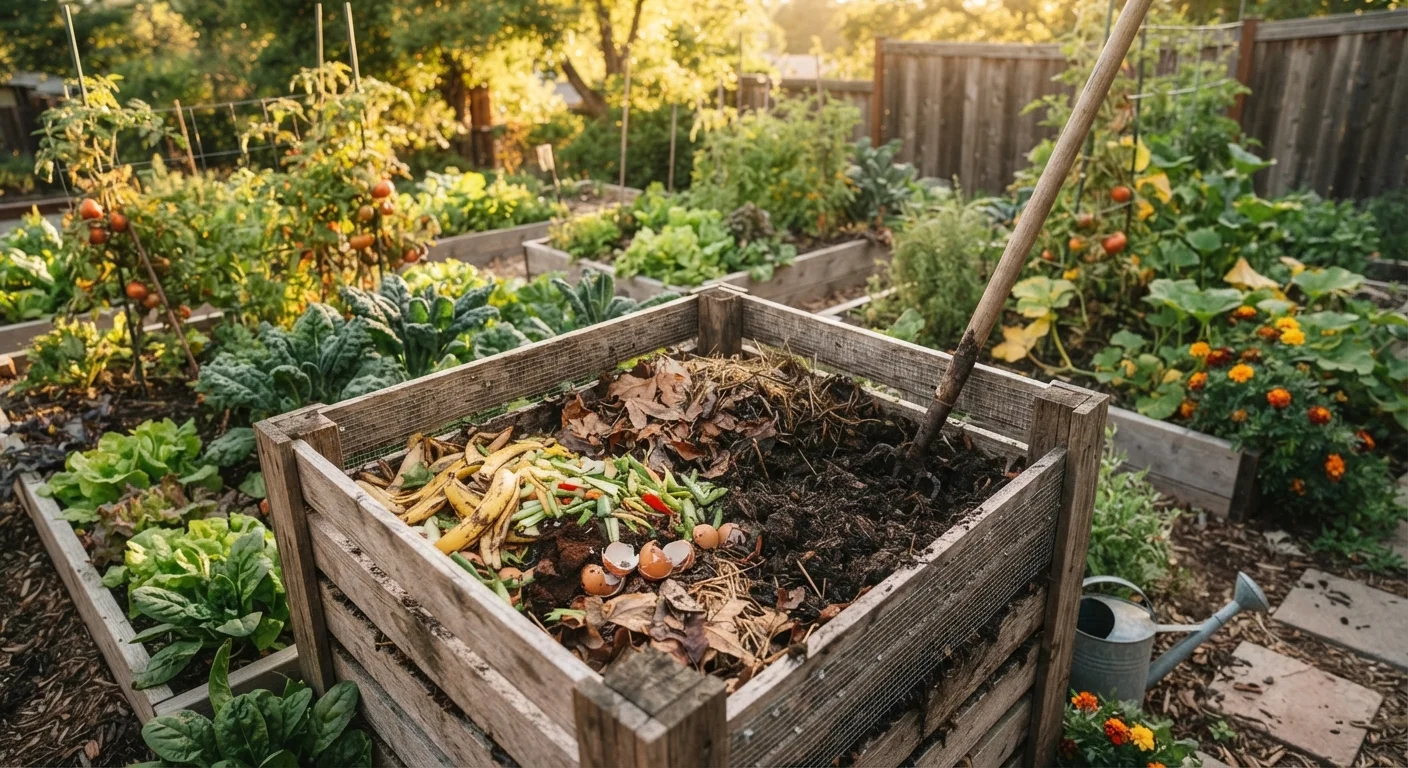
Composting is controlled decomposition. You collect organic material, pile it together in a way that supports microbial life, and wait while bacteria, fungi, worms, and insects convert that material into humus, the stable, nutrient-dense layer that gives healthy soil its dark color and spongy texture.
The inputs are split into two categories. 'Greens' are nitrogen-rich materials: fruit and vegetable scraps, coffee grounds, fresh grass clippings, and plant trimmings. 'Browns' are carbon-rich materials: dry leaves, cardboard, paper, straw, and wood chips. A working pile needs both. Too many greens and the pile turns slimy and smells. Too many browns and decomposition stalls.
Moisture and airflow complete the picture. Microorganisms need water to function, so the pile should feel damp like a wrung-out sponge. They also need oxygen, which is why turning or aerating the pile speeds things up considerably. Without air, anaerobic bacteria take over and produce the sulfur compounds responsible for bad odors.
How to start a compost system at home
The simplest setup is a pile on bare ground in a corner of your yard, at least 3 feet wide and 3 feet tall to retain heat. A basic bin made from wooden pallets or wire mesh contains the material and keeps the area tidy. Purpose-built plastic bins are available at many municipal programs, sometimes at reduced or no cost through local waste-reduction initiatives, so check with your county or city before purchasing anything.
Start by laying a base of coarse browns, such as small sticks or wood chips, to allow air to move through the bottom. Add your greens and browns in rough alternating layers, aiming for a ratio of about two or three parts brown to one part green by volume. Each time you add kitchen scraps, cover them with a layer of browns to discourage flies.
Turn the pile every one to two weeks with a garden fork to introduce oxygen and redistribute heat. A pile that is actively decomposing will feel warm in the center, sometimes noticeably hot. When the material no longer heats up after turning and looks dark and uniform, it is ready to use.
Cover fresh scraps every time
Each time you add kitchen scraps, bury them in the center of the pile and cover with a layer of dry browns. This simple habit reduces odor, discourages flies, and helps maintain the moisture balance that microorganisms need to work efficiently.
If you grow vegetables from seed, finished compost can be mixed into planting beds before transplanting. See our guide to seed starting vs. buying transplants for a full breakdown of how soil preparation affects seedling success.
The real cost savings
Finished compost replaces several products that most gardeners buy regularly. A bag of bagged garden soil or amendment, a container of granular fertilizer, and a bag of mulch each carry a price that adds up across a growing season. Compost can stand in for all three in many applications.
~30%
Share of household waste that is organic
The U.S. Environmental Protection Agency estimates that food and yard waste together make up roughly 30 percent of what Americans throw away.
6-8 weeks
Time to finished compost with active management
A hot, actively turned pile can reach usable compost in as little as 6 to 8 weeks under consistent moisture and aeration.
$0
Cost of homemade compost per cubic foot
Once a composting system is in place, finished compost costs nothing beyond the time spent managing the pile.
Beyond the garden, composting cuts the volume of household waste sent to the landfill. For families paying per-bag trash fees or using a service with volume-based pricing, reducing trash weight and frequency has a direct effect on cost. Even for households on flat-rate trash service, less waste in the bin means fewer liners used and fewer trips to the curb.
There is also a soil health dimension that compounds over time. Regular compost additions improve drainage in clay soils and water retention in sandy soils, reducing how much supplemental watering a garden needs. Lower water use means lower utility bills, particularly in regions where outdoor irrigation accounts for a significant share of summer water consumption.
For families already investing in a front yard or garden, compost is a low-cost way to get more from that investment. See low-cost curb appeal updates for other ways to stretch the garden budget further.
Common obstacles and how to handle them
Pests are the concern most people raise first. Rodents are attracted to food scraps, particularly cooked or high-fat material. Keeping meat, dairy, and oily foods out of the pile removes most of the attraction. A lidded bin with a solid base, or one with a wire mesh floor, adds physical protection if pests are common in your area.
Space constraints stop many households before they start. A worm bin, or vermicomposting setup, fits under a kitchen sink or on a balcony and processes scraps continuously without requiring outdoor space. The castings it produces are concentrated and effective, often described by gardeners as a high-value amendment for container plants and seedlings.
Time is the other objection. A passive pile that you rarely turn will still produce compost; it just takes longer. Households that cannot commit to active management can still divert scraps from the landfill and harvest usable material once or twice a year, which is a reasonable return on a minimal effort.