Why most houseplants die (and how to stop the cycle)
The two most common reasons houseplants fail are overwatering and poor light placement. Neither has anything to do with neglect or a so-called brown thumb. Once you understand what a plant actually needs versus what feels intuitive, keeping them alive gets straightforward.
Most people water on a schedule, the same day every week regardless of conditions. That approach ignores that soil dries at different rates depending on pot size, season, humidity, and the plant type. A better method: push a finger about an inch into the soil. If it feels damp, wait. Water only when the top inch or two is dry, unless the plant label specifies otherwise (succulents want even drier conditions before watering).
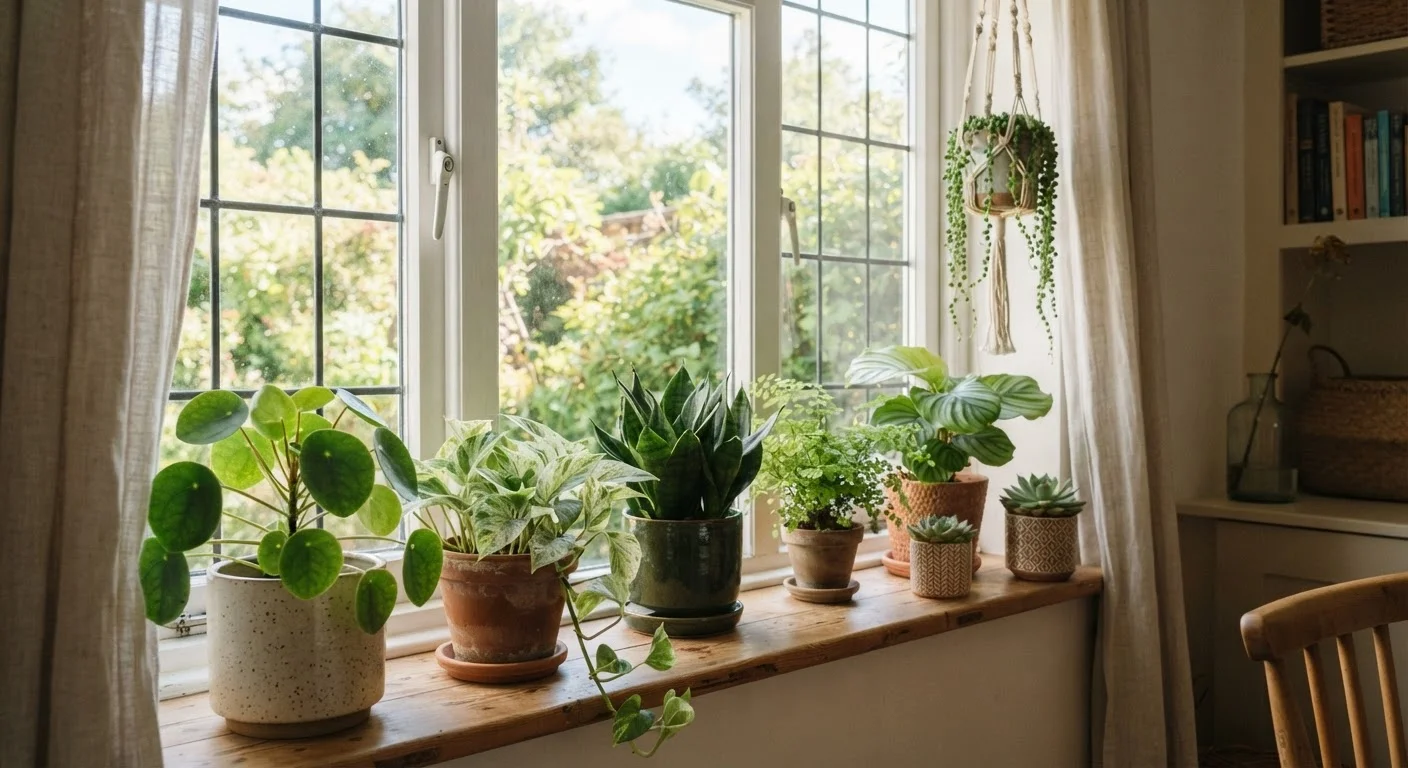
Light is the other variable most people underestimate. A room that looks bright to human eyes can still be too dim for a plant to photosynthesize efficiently. Plants placed more than a few feet from a window often receive less light than the space suggests. Moving a struggling plant closer to a light source frequently reverses a slow decline, before adding any fertilizer or changing the soil.
A simple light test for any room
Hold your hand about a foot above a white sheet of paper near where a plant is sitting. If you see a sharp shadow, light is adequate for most medium-light plants. A faint or absent shadow means the spot is too dim for most species. This is a rough guide, not a substitute for checking a specific plant's requirements.
Core care practices that make the biggest difference
These practices apply to the most common houseplants, including pothos, snake plants, peace lilies, spider plants, and philodendrons. Specialty plants like orchids or cacti have more specific needs, so always check individual requirements.
Check soil moisture before every watering rather than watering on a fixed schedule.
Soil moisture varies based on pot material, plant size, humidity, and season. Watering on a calendar ignores all of those factors and is the primary cause of root rot in container plants.
Place plants based on their light requirements, not on where they look good in the room.
Decorative placement often means plants end up far from windows or in rooms without adequate natural light. Without sufficient light, plants cannot photosynthesize enough to sustain themselves, and no amount of fertilizer compensates.
Use pots with drainage holes and empty saucers after watering.
Containers without drainage or saucers that hold standing water keep soil saturated, which deprives roots of oxygen and encourages rot. This is one of the easiest structural fixes with an immediate effect on plant health.
Fertilize only during the active growing season at half the recommended dose.
Over-fertilizing is a common mistake that burns roots and deposits salts in soil. Using a diluted dose reduces that risk and stretches a single bottle of fertilizer across multiple growing seasons.
Propagate established plants instead of buying new ones.
Many common houseplants propagate readily from cuttings or divisions, producing new plants at no cost. This also lets you share plants with others or replace a struggling specimen without any purchase.
Keeping costs low over the long term
The cheapest houseplant is one you already own. Propagation, the process of creating new plants from cuttings, stem nodes, or root divisions, lets you expand your collection without spending anything. Pothos, spider plants, and snake plants are especially easy to propagate in a glass of water or directly into moist potting mix. See our guide to what home gardeners actually save for a broader look at how propagation compares to buying new plants.
Potting mix is worth buying in a larger bag rather than small individual containers, since the per-volume cost drops considerably and you will use it for repotting, top-dressing, and propagation. Storing it in a sealed container keeps it usable for a year or more.
Fertilizing less is often more economical and better for the plant. Most houseplants need fertilizer only during active growth, which for most species in the continental US means roughly spring through early fall. A diluted liquid fertilizer applied monthly during that window is generally sufficient. Fertilizing in winter when growth has slowed can build up salts in the soil without any benefit to the plant.
Maintenance habits that prevent expensive problems
Dusty leaves block light absorption. Wiping leaves with a damp cloth every few weeks improves photosynthesis and makes pests easier to spot early. Common houseplant pests like fungus gnats, spider mites, and mealybugs are far easier to manage when caught at the first sign rather than after an infestation spreads.
Fungus gnats, those small flies that hover around soil, are almost always a sign of consistently wet soil. Letting the top layer of soil dry out between waterings eliminates the moist conditions the larvae need to survive. No special product is required in most cases.
Repotting is only necessary when a plant is genuinely rootbound (roots circling the bottom of the pot or pushing out of drainage holes) or when soil quality has degraded noticeably. Moving a plant up one pot size, not several sizes at once, gives roots room without leaving excess wet soil around them that promotes rot. This is also a good moment to inspect roots and trim any that are soft, brown, or mushy.
For readers who also want to improve the outdoor side of their homes, the same patient, low-cost approach applies. Our article on low-cost front yard updates covers what actually delivers visual impact without a large budget. And if you apply this same habit-based thinking to other household items, the device longevity guide shows how routine care extends the life of everyday electronics the same way it does for plants.