Why the front yard pays off more than the backyard
Curb appeal is what neighbors, guests, and passersby see every day. A tidy, well-kept front yard signals that a home is cared for, which matters whether you plan to sell eventually or simply want to feel good pulling into your driveway. The good news is that the changes with the strongest visual return are mostly about effort, not expense.
The updates below can realistically be completed over a single weekend, with most materials costing well under $100 total. For families who already stay on top of seasonal maintenance, many of these tasks will slot naturally alongside work covered in our spring home maintenance checklist.
Edge your lawn and clean the walkway
Lawn edges that have crept over concrete make a yard look neglected even when the grass itself is healthy. A manual or battery-powered edger creates a clean line along driveways, sidewalks, and garden beds. Paired with a thorough sweep or leaf blower pass, this single task can transform the overall impression of the front yard in about an hour.
Pressure washing the driveway and walkway is equally fast and uses no chemicals. Rental pressure washers are widely available, or a standard garden hose with a high-pressure nozzle handles light buildup. Remove moss or algae from shaded walkways before someone slips on wet concrete.
Clean edges make a yard look cared for before you spend a single dollar on plants.
Paint or replace your front door
The front door is the focal point of any facade. A door that is faded, scuffed, or a dull builder-grade color pulls the eye down. Exterior paint formulated for doors is widely available, dries quickly, and a single quart covers most standard doors with two coats to spare.
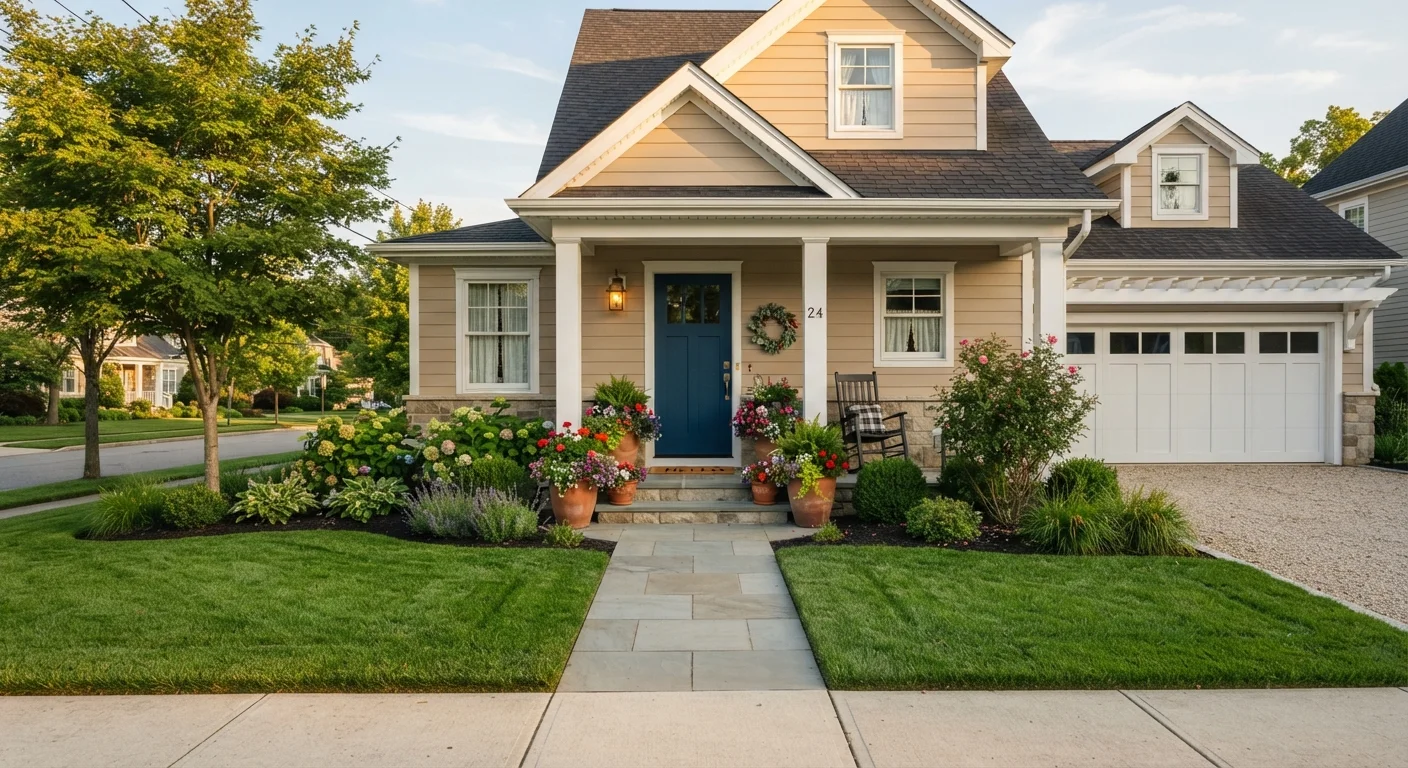
Choose a color that contrasts with your siding without clashing with brick or stonework. Deep navy, forest green, matte black, and warm red are consistently popular choices that read well from the street. Replace tarnished hardware at the same time: a new handle set and house numbers cost relatively little and complete the update.
A freshly painted front door is the highest-impact change per dollar on any exterior.
Mulch your garden beds
Bare soil between plants looks unfinished and invites weeds. A 2- to 3-inch layer of shredded wood mulch gives every bed a clean, intentional appearance while suppressing weed growth and helping soil retain moisture through dry spells. Most garden centers sell mulch by the bag or by the cubic yard, and a few bags are enough to cover a typical front-yard bed.
Dark brown or black mulch tends to photograph well and creates a strong contrast against green foliage. Avoid piling mulch against plant stems or tree trunks, which can cause rot. Pull existing weeds before you lay mulch, or they will simply push through.
Mulch is the fastest way to make a neglected bed look intentional and tidy.
Add potted plants at the entry
Containers near the front door create color and structure without permanent landscaping. Two matching pots flanking the door add symmetry; a cluster of varying sizes on one side of a stoop works for asymmetrical entries. Choose plants suited to your light conditions: full sun spots support petunias, geraniums, and marigolds, while shaded entries do well with impatiens or caladiums.
Container plants need more frequent watering than in-ground plants because their soil dries out faster. A saucer under each pot helps retain moisture and protects the concrete below. At the end of the season, the containers can be replanted with cold-tolerant options like ornamental kale or pansies to extend the display.
Two matching containers at the front door cost little and create an immediate sense of arrival.
Trim overgrown shrubs and remove dead growth
Foundation shrubs that have grown past window sills or spread over walkways make a home look smaller and darker than it is. Hand pruners and loppers handle most shrub trimming without powered tools. Cut dead branches back to healthy wood, and thin dense shrubs from the interior to improve air circulation and natural shape.
Timing matters for flowering shrubs: spring bloomers like forsythia and lilac set next year's buds shortly after flowering, so trim them immediately after bloom rather than in late summer. For most evergreen and non-flowering foundation shrubs, late winter or early spring, before new growth starts, is generally the right window. Check the specific needs of your plants before cutting.
Cutting foundation shrubs below window height immediately makes a house look larger from the street.
Update your mailbox and house numbers
A rusted, leaning, or dated mailbox is a detail most homeowners stop seeing after a while. Replacing or repainting it takes less than an hour and costs very little. If the post is sound, a fresh coat of exterior paint and a new mailbox door or flag is often enough. If the post leans, resetting it in the ground properly is a simple weekend task with basic tools.
House numbers that are small, faded, or hard to read from the street are a practical problem as much as an aesthetic one. Larger numbers in a contrasting finish (matte black against white trim, for example) are easy to find and install with basic screwdrivers. Consistent finishes across the mailbox, door hardware, and house numbers give the exterior a pulled-together look without any single large purchase.
Consistent hardware finishes across the entry cost little but create a noticeably more considered exterior.
Making the most of what you already have
Before buying anything, walk your property line from the street and photograph what you see. A critical eye from 30 feet away often reveals that overgrown shrubs, cracked edging, or a dull mailbox are doing more damage than a bare flower bed ever would. Fix what you have before adding anything new.
Start from the street, not the garden
Before spending anything, stand at the curb and take a photo of your home on your phone. What stands out most in the image is what visitors notice first. Focus your first hour of effort on those elements rather than working outward from the house. This simple step prevents spending time on details that have almost no visual impact at normal viewing distance.
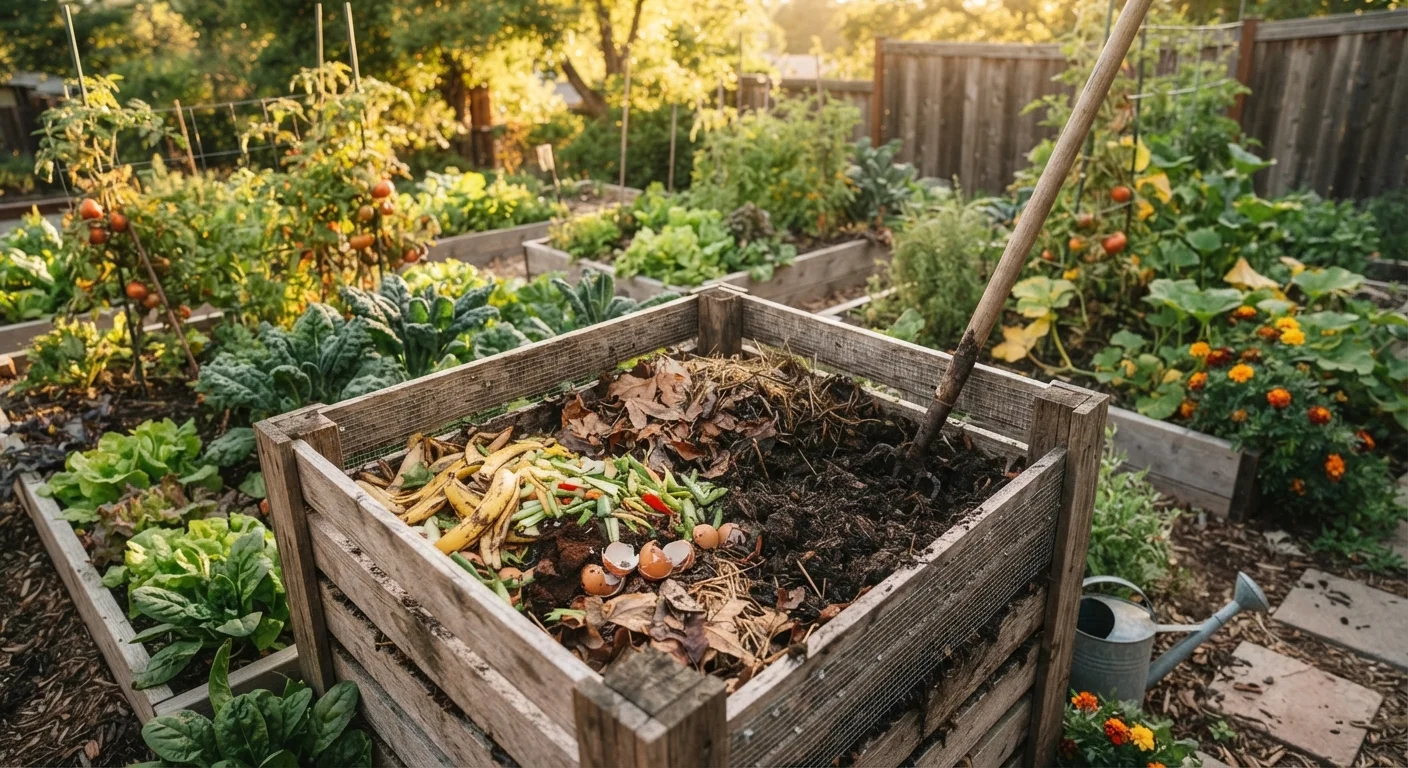
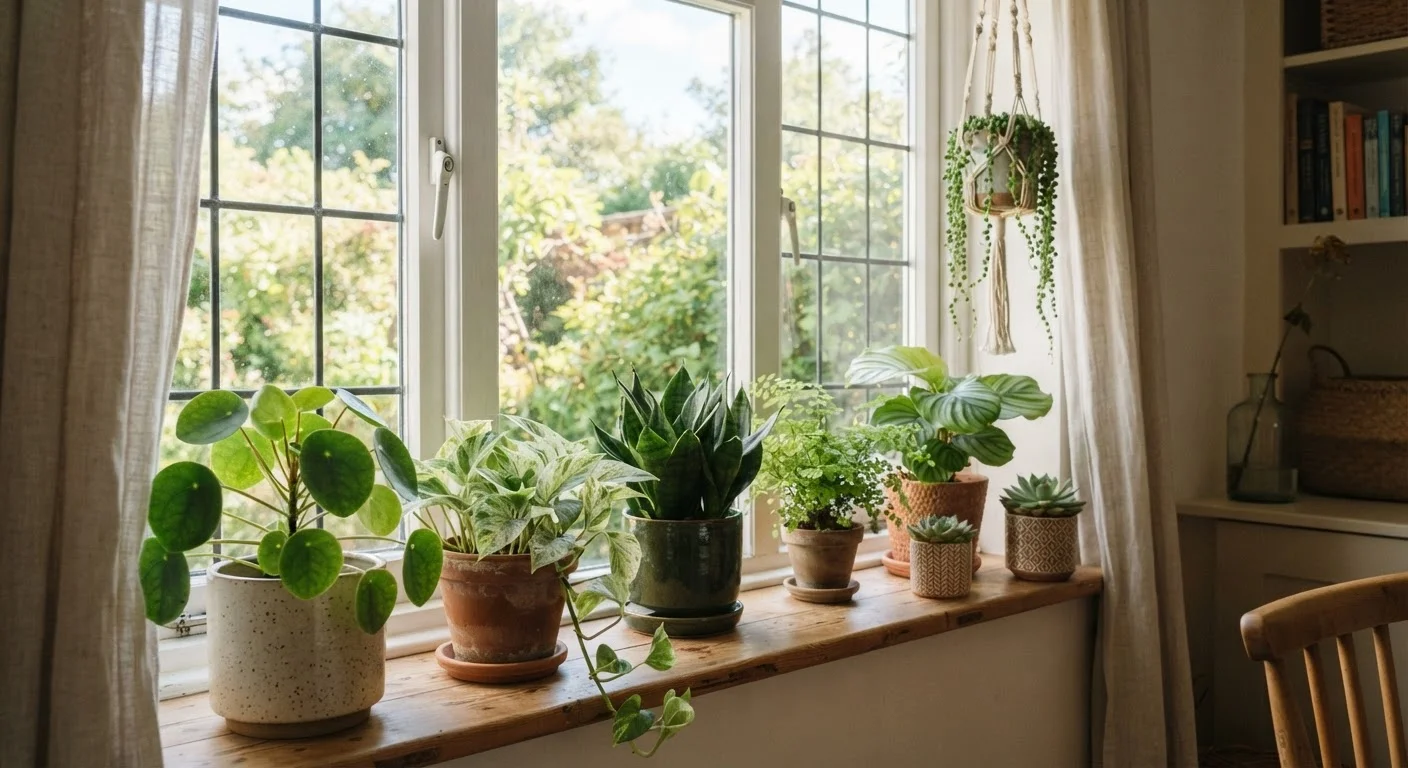
If you want to add plants without recurring costs, home composting can supply free fertilizer that keeps new plantings healthy through the season. For anyone curious about maintaining plants once they are in place, the care habits described in our guide to keeping houseplants alive without spending much translate well to container plantings outdoors.