Why the DIY vs. shop question matters for family budgets
Labor costs account for a large portion of most repair bills. A task that takes a shop an hour at $100 to $150 per hour might take a home mechanic two hours and cost only the price of parts. For a family managing a tight budget, that difference adds up over a year of ownership.
The catch is that some repairs carry risks that turn a small mistake into a large expense, or worse, a safety hazard on the road. The goal is not to do everything yourself; it is to be accurate about which jobs you can handle without putting yourself, your passengers, or other drivers in danger. If you are still sorting out what a dashboard warning light means, decoding those symbols first will help you understand the repair category before you pick up a wrench.
Repairs most careful home mechanics can handle
These tasks share a few things in common: they do not affect braking or steering directly, they require only basic tools, and mistakes are usually obvious before the car moves.
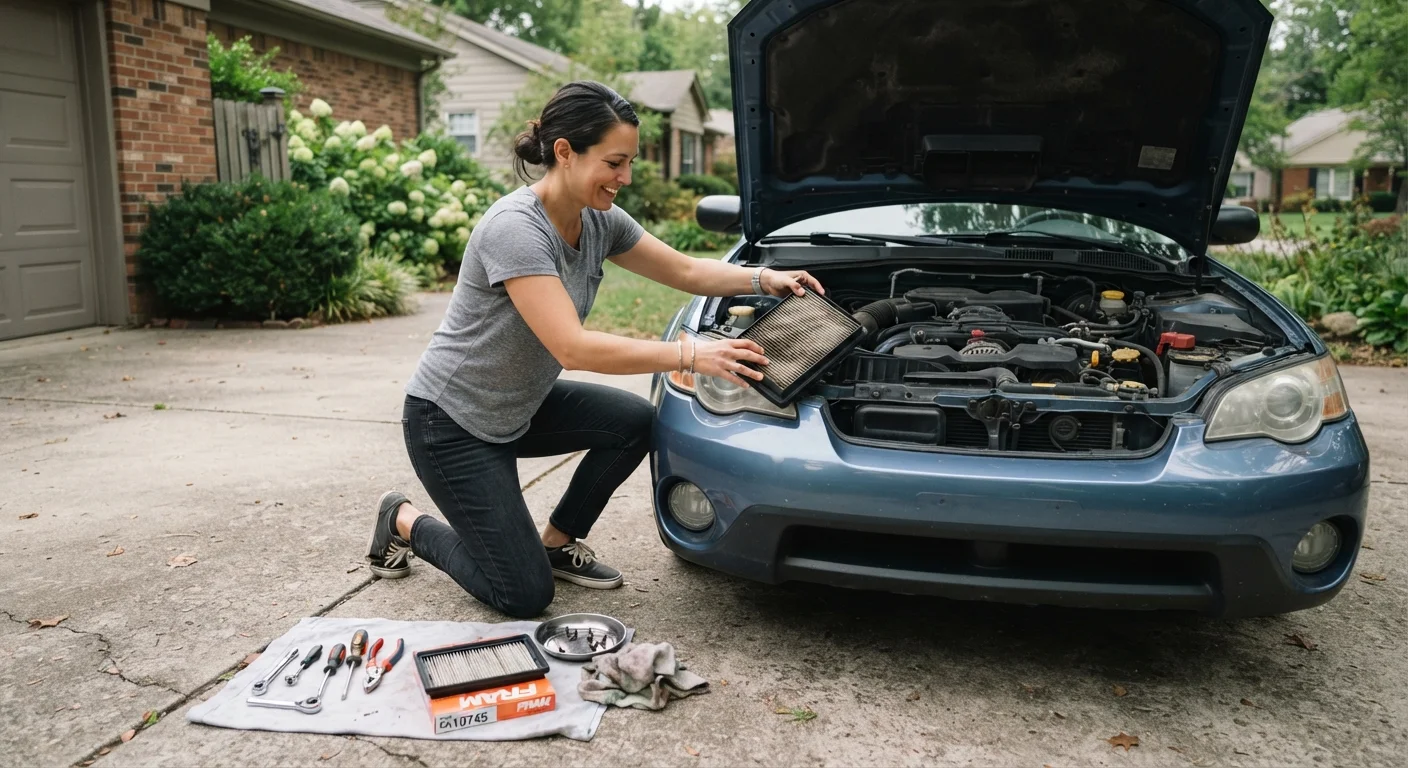
- Engine air filter replacement: typically involves removing a few clips or screws and swapping a paper filter. No special tools needed.
- Cabin air filter: usually located behind the glove box. The procedure takes under 20 minutes on most vehicles.
- Wiper blade replacement: blades clip on and off. Consult the owner's manual for the correct size.
- Battery replacement: disconnect the negative terminal first, then the positive. Reconnect in reverse order. Note that some vehicles reset computer settings after a battery swap, so check your owner's manual.
- Spark plug replacement: straightforward on four-cylinder engines with accessible plugs. More complex on V6 or V8 engines with rear-bank plugs, where a shop may be the smarter call.
- Oil and filter change: requires a jack, jack stands, a drain pan, and the correct oil spec from your owner's manual. Done correctly and consistently, this is one of the highest-value DIY tasks for long-term engine health.
These are also the costs that catch many first-time car owners off guard when they show up on a shop invoice.
Get a vehicle-specific repair manual
A general YouTube video may not match your exact engine or trim level. A repair manual specific to your year, make, and model will give you torque specs, correct fluid types, and the right procedure for your vehicle. Many public libraries offer free access to repair databases such as Chilton or ALLDATA.
Repairs that belong at a shop
The following jobs involve systems where an error has direct consequences for vehicle control or occupant protection. This is not about mechanical skill level; it is about the consequences of getting it wrong.
- Brake pad, rotor, and caliper work: misaligned calipers, improperly torqued lug nuts, or air in brake lines can cause brake failure. Even experienced home mechanics often misjudge rotor thickness or caliper slide pin condition.
- Suspension and steering components: ball joints, tie rods, and control arm bushings affect the geometry of your wheels. An incorrect installation changes how the car handles at speed, often in ways you will not notice until an emergency.
- Fuel system repairs: fuel under pressure is a fire hazard. Injector, pump, or line work requires proper depressurization and, in many states, specific handling and disposal procedures.
- Airbag and SRS system work: accidental deployment is a real risk. This system should only be serviced by technicians with the right diagnostic equipment.
- Transmission repairs: internal transmission work requires specialized tools and a controlled environment. Incorrect reassembly is not usually detectable until the transmission fails under load.
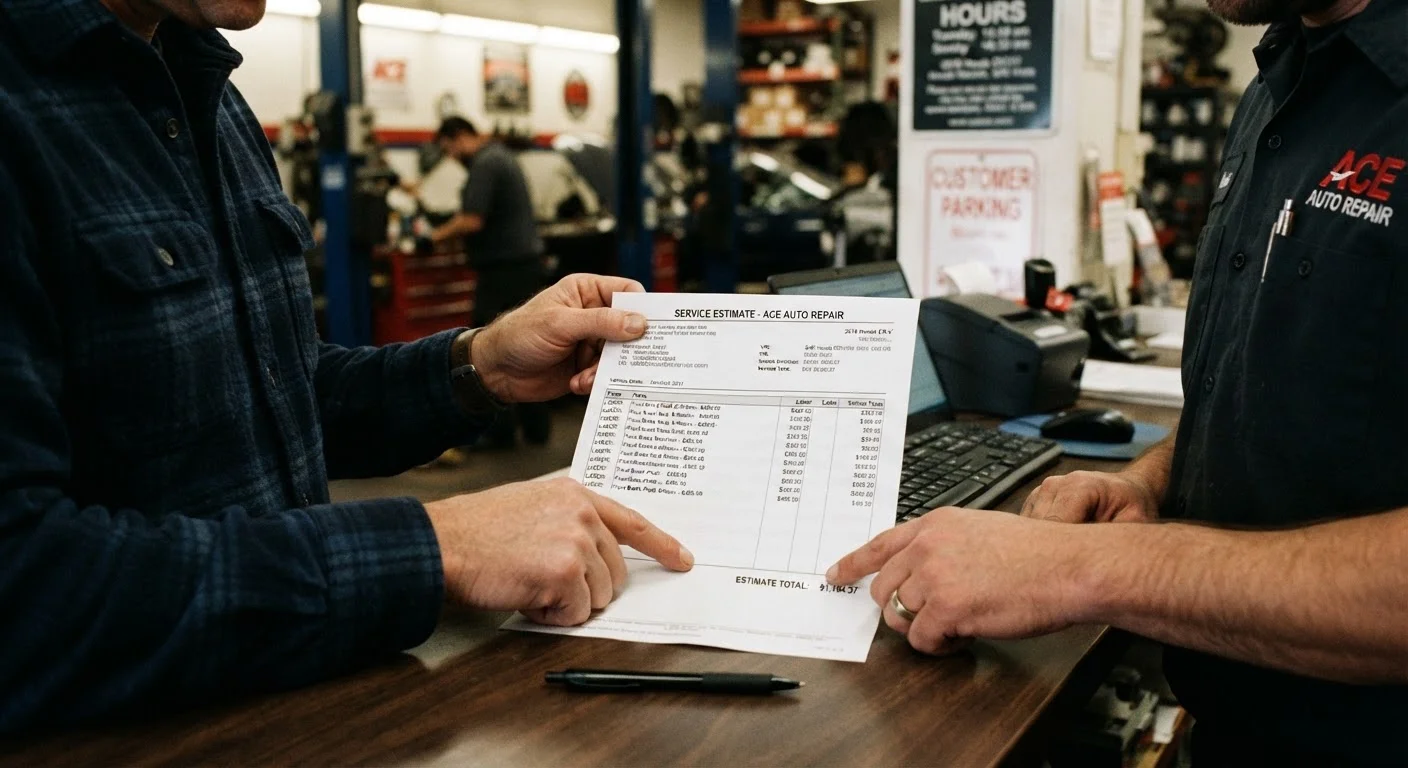
If you receive a shop estimate and want to understand whether it is reasonable before agreeing, knowing what questions to ask can help you evaluate the quote without guesswork.
Do not rely on confidence alone
Many brake and suspension injuries happen to people who have done similar work before and assumed the next job would go the same way. Worn hardware, corroded fasteners, and model-specific quirks change the job. If you open a repair and find something unexpected, stopping and taking it to a shop is the right call, not a failure.
The honest cost comparison
Before starting any DIY repair, account for the full cost: parts, any tools you need to purchase, and a realistic estimate of your time. A tool you buy once amortizes over future use, but a specialty tool used only once often costs more than a shop visit.
| DIY at home | Licensed repair shop | |
|---|---|---|
| Upfront parts cost | Parts only, no labor markup | Parts plus labor at shop rate |
| Tool investment | May require purchasing tools | No tool cost to you |
| Time required | Longer; learning curve applies | Faster; trained technicians |
| Safety assurance | Depends on skill and diligence | Accountability and warranty on work |
| Best for | Filters, fluids, wiper blades | Brakes, suspension, fuel, airbags |
| Risk if done incorrectly | Low on maintenance tasks | High on safety-critical systems |
Factor in your vehicle's age and complexity as well. Repairs on vehicles built after roughly 2010 often involve tight engine bays, plastic undertray panels, and electronic sensors that complicate otherwise simple jobs. On a newer or high-mileage vehicle, understanding the tradeoffs of ownership is worth doing before committing to a repair strategy.