Why the same light can mean very different things
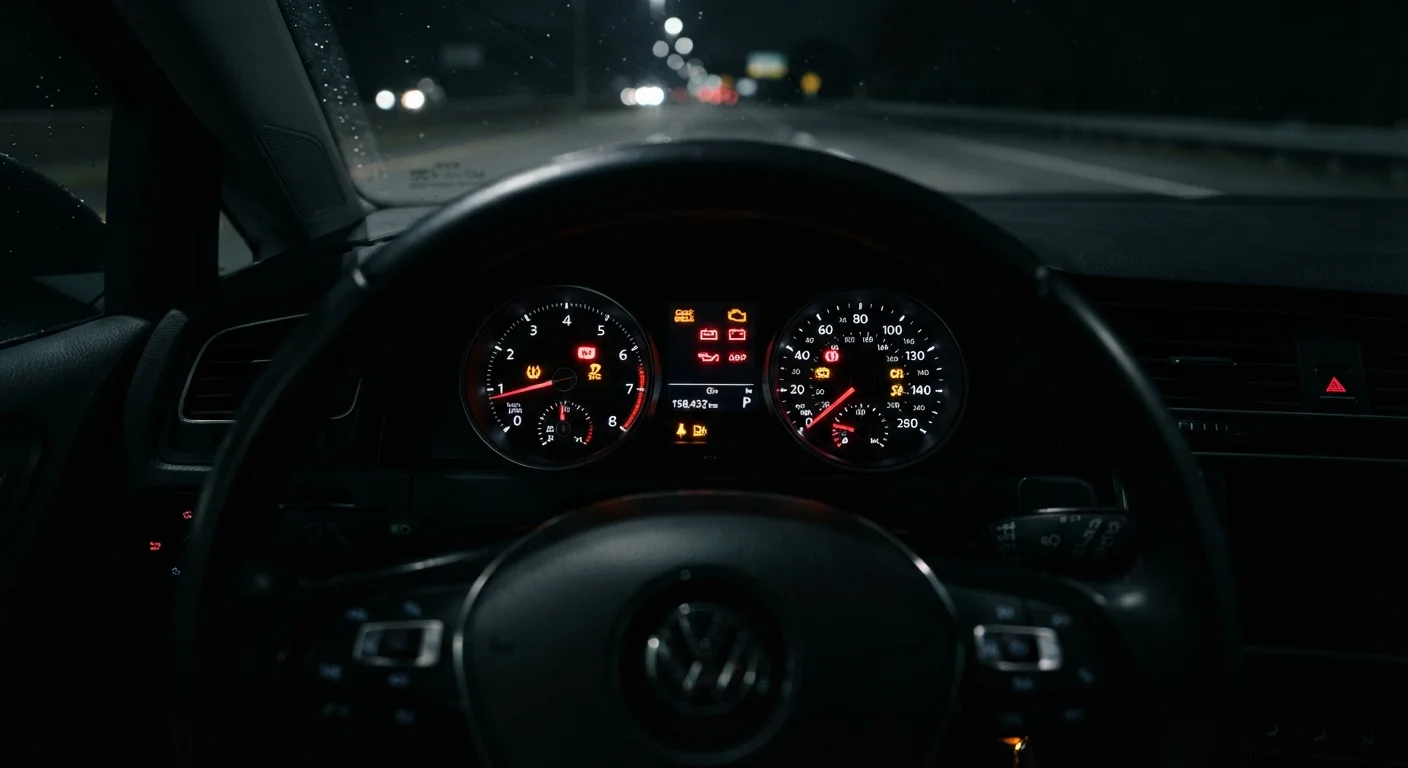
Your dashboard is not a single alarm system. It is a collection of separate monitors, each tied to a specific vehicle system. The same symbol can indicate a minor sensor glitch or a failure that will damage your engine within minutes. Color is the first filter: red means stop or act immediately, amber means schedule attention soon, and green or blue is informational.
Most drivers do not consult their owner's manual until something goes wrong, and even then, they often search online and get conflicting answers. This reference covers the lights that appear most often, what they actually signal, and how urgently each one warrants action.
OBD-II
On-Board Diagnostics II, a standardized system built into vehicles sold in the U.S. after 1996 that records fault codes when a sensor or system falls outside normal parameters. A compatible scanner can read these codes and identify the specific problem behind a check engine light.
TPMS
Tire Pressure Monitoring System. Sensors in each wheel (or a wheel-speed-based calculation) alert the driver when tire pressure drops significantly below the recommended level printed on the door jamb sticker.
Catalytic converter
An emissions control device in the exhaust system that converts harmful combustion byproducts into less harmful gases. Engine misfires can overheat and damage the converter, which is an expensive component to replace.
Alternator
A generator driven by the engine's accessory belt that keeps the battery charged and powers the vehicle's electrical systems while the engine runs. A failed alternator means the battery drains without being replenished.
Fault code
A numeric or alphanumeric code stored by the vehicle's computer when a sensor reading falls outside acceptable limits. Fault codes narrow down the cause of a warning light but do not always identify the exact failed part without further diagnosis.
Lights that require immediate action
Pull over safely and shut the engine off when you see any of these:
- Oil pressure warning (red oil can symbol): This does not mean you are low on oil. It means oil pressure has dropped to a level that will cause metal-on-metal contact inside the engine. Driving even a short distance can destroy bearings. Turn off the engine, wait a few minutes, check the dipstick, and do not restart until the cause is identified.
- Engine temperature warning (red thermometer or wavy lines): The cooling system is failing or coolant is critically low. Pull over, turn off the engine, and let it cool for at least 30 minutes before opening anything under the hood. Do not add cold water to a hot engine.
- Battery/charging system (red battery symbol): The alternator may have failed or a connection is broken. The car is running on battery reserve only. You may have 15 to 30 minutes before it stalls entirely. Minimize electrical load and get to a shop or safe location.
- Brake warning (red exclamation point in circle or BRAKE text): If the parking brake is fully released and this light stays on, brake fluid may be dangerously low or there is a hydraulic failure. Do not continue driving without inspection.
For high-mileage vehicles, these lights can appear with less warning. See what to watch for in high-mileage cars for context on age-related system wear.
Amber lights: schedule a visit, but don't panic
Amber lights generally mean a system is outside its normal operating range but not in immediate danger of causing a breakdown or safety failure. They should not be ignored for weeks, but you are not obligated to pull over on the spot.
- Check engine (amber engine outline): This light covers hundreds of possible fault codes. A steady check engine light usually points to an emissions system issue, a loose gas cap, a failing sensor, or a misfiring cylinder. A flashing check engine light is more serious and means the engine is misfiring badly enough to damage the catalytic converter. A flashing light warrants same-day attention.
- TPMS (tire pressure monitoring system, exclamation point in a horseshoe): One or more tires are 25% or more below the recommended pressure. This affects handling and fuel economy. Check pressure with a gauge before assuming a sensor fault. Tires lose roughly 1 PSI per 10-degree Fahrenheit drop in temperature, so cold weather triggers this frequently.
- Traction control or stability control (car with wavy lines): If this light flashes briefly during acceleration or cornering, it is working normally. If it stays on, the system has been disabled or has a fault. Winter driving without functioning traction control on slick roads is genuinely riskier.
- Low fuel (fuel pump symbol): Most vehicles have 30 to 50 miles of range when this activates, but that range varies by vehicle and driving conditions. Regularly running a tank near empty can shorten fuel pump life over time.
Many of these amber codes can be read at home with an inexpensive OBD-II scanner, which pulls the specific fault code before you visit a shop. See which repairs you can handle yourself to understand where the line between DIY and professional work typically falls.
| Colors used for dashboard warnings | Red (urgent), amber (attention needed), green/blue (informational) |
| OBD-II required on U.S. vehicles since | 1996 (U.S. EPA OBD-II mandate) |
| Approximate range when low-fuel light activates | 30 to 50 miles (varies by vehicle) |
| Tire pressure drop per 10 degrees F temperature decrease | Approximately 1 PSI (General automotive engineering reference) |
| TPMS alert threshold | 25% below recommended pressure (NHTSA TPMS rule) |
| Fault codes readable with | Any OBD-II compatible scanner |
The oil life monitor and service reminders
Many modern vehicles show an oil life percentage or a "Service Required" message rather than a traditional oil can warning. These are calculated reminders based on driving patterns, not a direct sensor of oil condition. They do not mean your oil is dirty right now; they mean the car's algorithm estimates it is approaching the change interval.
Dealer-recommended intervals are often more conservative than what the oil and engine actually require. Your owner's manual is the authoritative source. Understanding actual oil change intervals can help you avoid paying for service you do not yet need.
If you have recently had maintenance and a service light is still on, it likely was not reset after the work. Any shop or quick-lube facility can reset it in under a minute.
For a full picture of scheduled maintenance costs that often catch drivers off guard, routine maintenance expenses worth budgeting for lays out what to expect.