Why national parks work for family travel
America's national parks give families access to landscapes that would cost considerably more to experience through a guided tour or resort package. The National Park Service (NPS) manages more than 400 sites across the country, ranging from ocean shorelines to desert canyons to old-growth forests. Many of those sites charge no entrance fee at all.
The structure of a park trip also suits families in ways a cruise or all-inclusive resort cannot. Children can move at their own pace, activities scale naturally from a short nature walk to a full-day hike, and the environment rewards curiosity without requiring a purchase. The Junior Ranger program, available at most parks, gives kids a structured way to engage with the landscape through booklets they can pick up free at the visitor center. Completing one earns an official badge, and for many children that moment sticks longer than a roller coaster.
For families thinking through whether a park trip or a packaged vacation makes more financial and logistical sense, the tradeoffs between all-inclusive and build-your-own trips are worth understanding before you book.
Understanding entrance fees and passes
Per-vehicle entrance fees at the most visited parks currently range from around $15 to $35, valid for seven days. A family visiting two or more fee-charging parks in a year will almost certainly save money with the America the Beautiful Interagency Annual Pass, priced at $80. It covers the passholder and passengers in a single vehicle at hundreds of federal lands, including all NPS fee sites.
Several categories of people receive a free or discounted version of this pass. U.S. military members and their dependents get the pass free. U.S. residents with permanent disabilities can apply for a lifetime pass at a one-time fee of $80 or an annual pass for $20. Fourth-grade students are eligible for a free pass through the Every Kid Outdoors program, which is open to the student and their family for one school year.
Book campground reservations on Recreation.gov the moment your six-month window opens, ideally right at 10 a.m. Eastern time when new dates release. Popular sites at Yosemite, Yellowstone, and Glacier are gone within minutes.
Demand at the most visited parks far exceeds supply during summer, and families who miss the opening window often find no sites available for months.
Pick up the Junior Ranger booklet the moment you arrive at the visitor center, not on your way out. Children who have an activity to work through while hiking stay engaged longer and complain less.
The NPS designed the Junior Ranger program specifically to give children structure in an unstructured environment, and it works best when woven into the day rather than rushed at the end.
Children 15 and under enter all NPS sites free, regardless of whether the family holds a pass. That means the entrance fee for a family of four, with two adults and two kids under 16, is calculated only for the adults under the vehicle rate.
Choosing the right park for your family
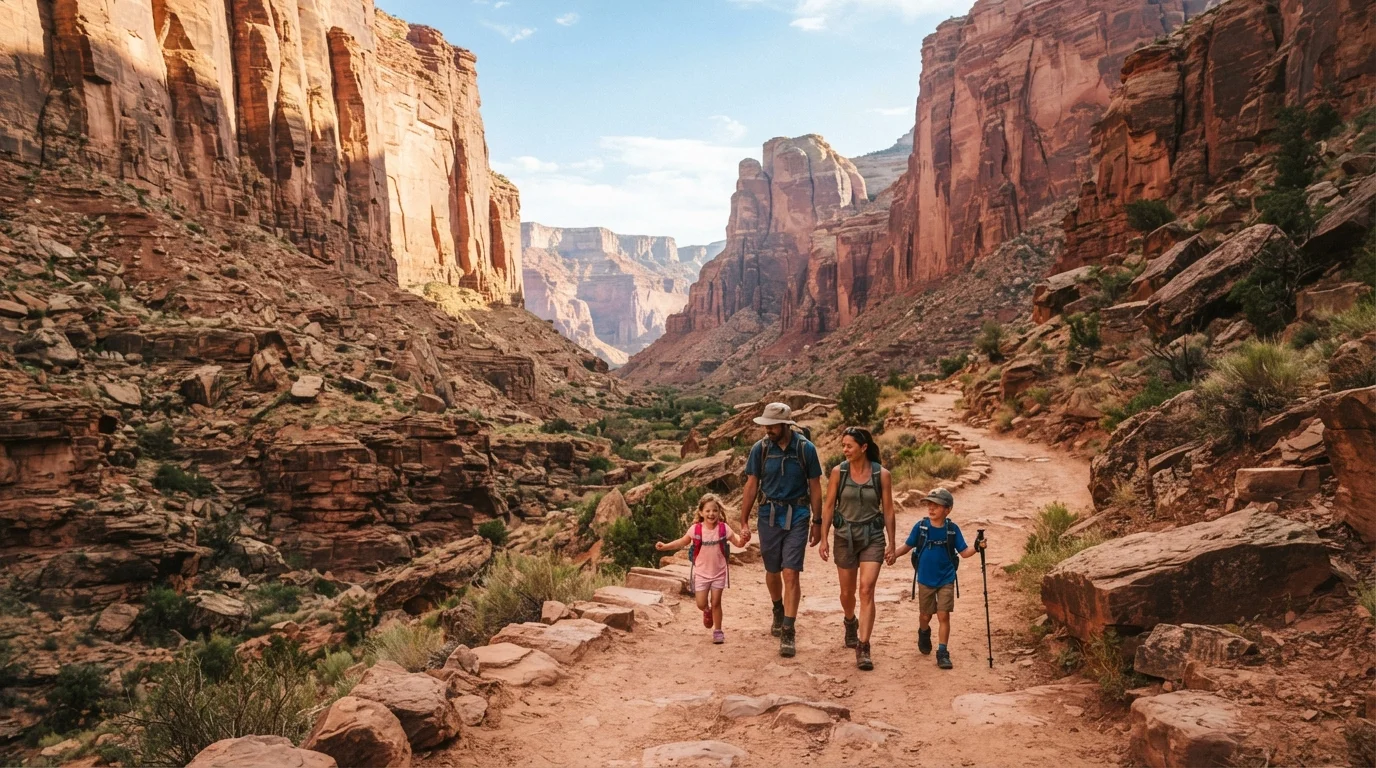
Park selection is where many families make their first misstep: they choose a park based on a photograph without checking whether it suits their children's age and stamina. A park like Rocky Mountain or Olympic has trails that can genuinely exhaust adults; bringing toddlers or children under five without a carrier plan can turn an exciting day into a miserable one.
Parks with strong family reputations for mixed ages include Acadia (Maine), with short carriage road loops and tide pool access; Shenandoah (Virginia), where Skyline Drive lets families take in views without hiking a step; Carlsbad Caverns (New Mexico), where the main cave room is accessible via elevator; and Zion (Utah), where the Riverside Walk at the end of the canyon is paved and stroller-accessible. Lesser-known destinations sometimes deliver equally memorable experiences with far smaller crowds.
Before choosing, check the NPS website for a given park's accessibility notes, trail ratings, and whether timed-entry permits are required. Some parks now require advance reservations just to enter during peak months.
Lodging options: campgrounds, cabins, and gateway towns
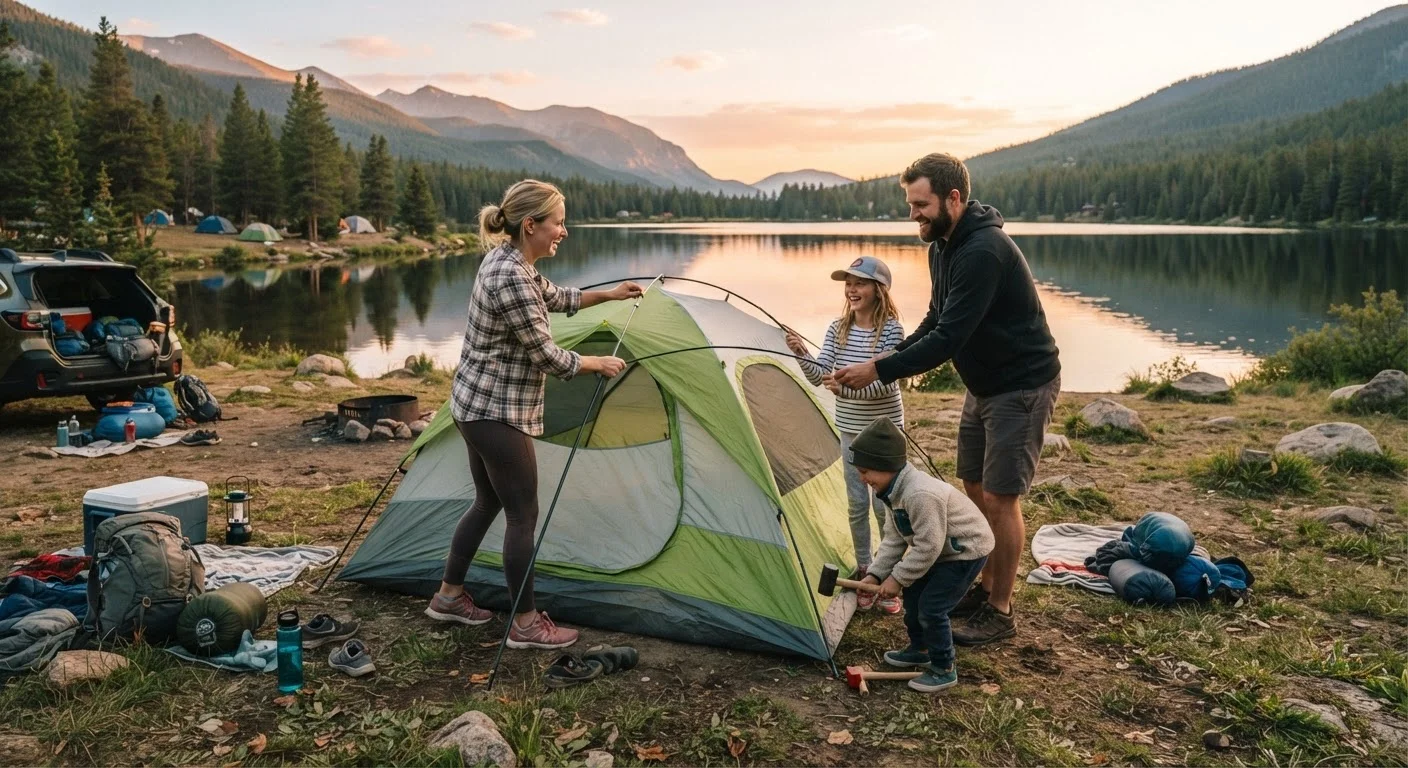
Lodging is typically the largest variable in a park trip budget. Inside the park, options run from tent and RV campgrounds to historic lodges operated under NPS concession agreements. Campground sites at popular parks cost roughly $20 to $50 per night depending on hookups and amenities. Lodges and cabins inside park boundaries tend to book out months in advance and run $150 to $300-plus per night.
Gateway towns, the towns directly outside park boundaries, offer a wider range of prices and more availability. Staying in a gateway town adds driving time in the morning but removes some of the booking pressure. For a detailed look at how camping compares to hotel stays on cost and logistics, see the camping vs. hotel comparison for families.
Recreation.gov handles reservations for most NPS campgrounds. Some sites use a lottery system for high-demand spots. First-come, first-served sites exist at many parks but fill by mid-morning during summer weekends. Arriving on a weekday changes the calculus considerably.
Budget planning and hidden costs
Families often underestimate total park trip costs because the entrance fee is the most visible number. Parking fees, food, and fuel deserve equal attention. Many parks charge $5 to $35 for parking separately from the entrance fee. Concessionaire food inside parks carries a significant markup; a family that packs a cooler with lunches and snacks from a grocery store in the nearest town will spend noticeably less. Gas stations near popular parks also charge above average prices.
Cell coverage is limited or absent in most parks, which affects navigation and emergency communication. Downloading offline maps before leaving a signal area is a practical step, not a suggestion to ignore. Some parks have free shuttle systems that eliminate parking stress entirely - Zion and Acadia both run well-regarded shuttles that families can use as their primary transport inside the park.
For a full accounting of what commonly surprises families mid-trip, the overlooked travel expenses guide covers the categories most likely to blow a budget.
Pack your own food whenever possible
Grocery shopping in a nearby town before entering the park can cut daily food costs for a family of four by $40 or more compared to buying meals at park concessions. A simple cooler with sandwich supplies, fruit, and snacks covers most of a day's eating. Many parks have picnic areas with tables and fire grates that make this straightforward.
Timing, crowds, and realistic expectations
Peak season at most parks runs from Memorial Day through Labor Day, when school schedules drive the bulk of family visits. Wait times for parking, trail congestion on popular routes, and campsite availability all worsen during this window. Visiting in May or October at parks in moderate climates can mean similar weather with meaningfully smaller crowds.
Weather is a real factor, not a detail. High-altitude parks like Rocky Mountain and Crater Lake can see snow in June. Desert parks like Death Valley and Joshua Tree are genuinely dangerous in July and August, with daytime temperatures regularly exceeding 110 degrees Fahrenheit. Always check current conditions through the NPS website or the specific park's page before you go, and verify any entry requirements, permit rules, or temporary closures directly with the park, since conditions change.
Children have physical limits that adults underestimate, especially at elevation. A 10-year-old who hikes easily at sea level may struggle on a trail at 9,000 feet. Altitude sickness is real and can affect kids as readily as adults. Plan shorter distances than you think you need on the first day in a high-elevation park. The common myths about budget travel include the assumption that saving money requires sacrificing comfort; at parks, smart planning delivers both.