What you actually pay: cost comparison
A hotel room that fits four people comfortably costs anywhere from $120 to $250 per night in most U.S. markets, and that figure climbs near popular tourist destinations or during peak summer weeks. Add resort fees, parking, and the near-certainty of buying at least some meals out, and a week of hotel nights can easily run $1,500 or more in lodging and food alone.
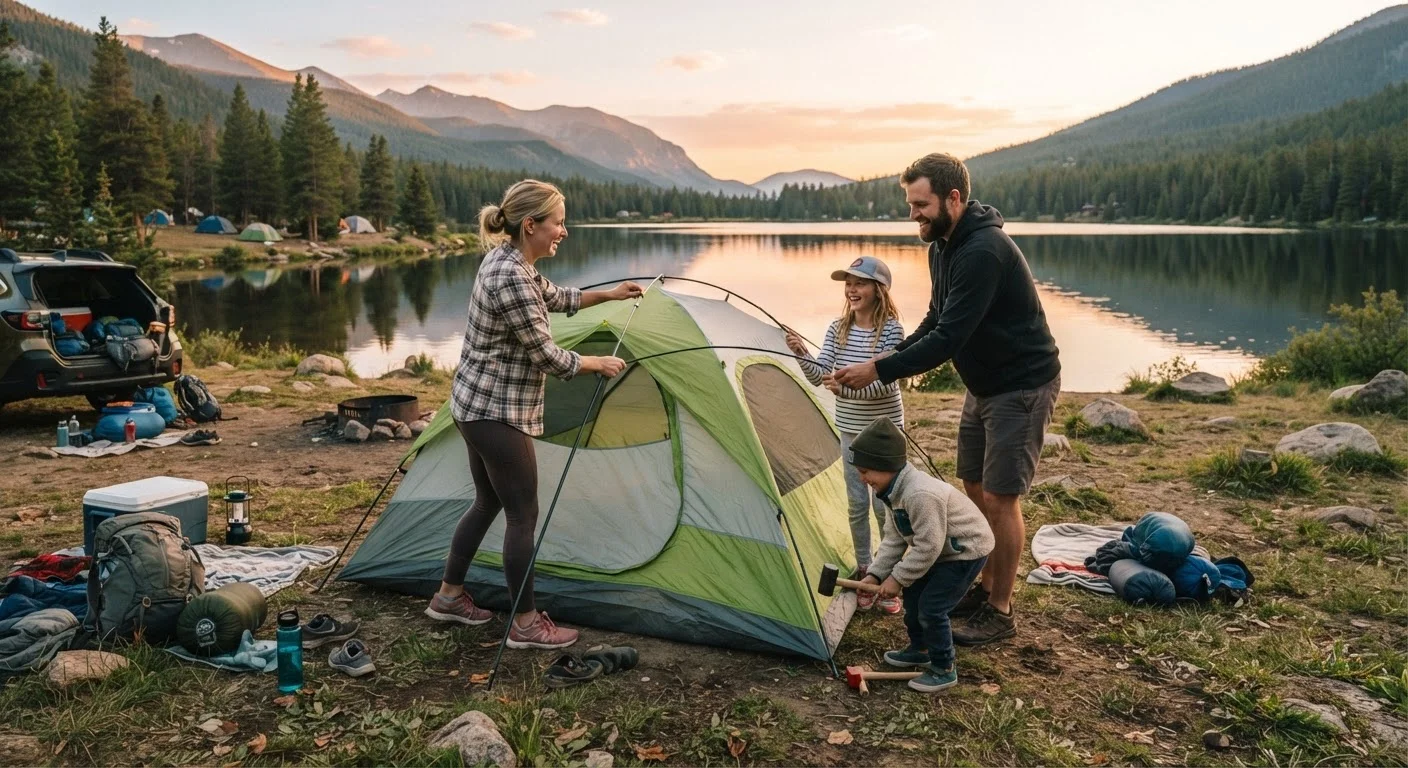
A developed campsite at a state or national park typically runs $20 to $55 per night. Even a premium campground with electrical hookups and shower facilities rarely exceeds $80 per night. Cook your own meals at the site and you can feed a family of four for $15 to $25 a day. Over seven nights, that math matters. For more on keeping the full trip budget in check, see overlooked family travel expenses.
The caveat is gear. A first camping trip for a family that owns nothing can require $400 to $800 in tents, sleeping bags, and cooking equipment. That investment looks different on trip one versus trip five. If you already own the basics, camping's cost advantage is immediate.
| Camping | Hotel stay | |
|---|---|---|
| Nightly cost (family of four) | $20 to $80 | $120 to $250+ |
| Meal costs | $15 to $25/day cooking in camp | $50 to $100+/day eating out |
| Upfront investment | $400 to $800 for gear (first trip) | None beyond booking |
| Comfort and climate control | Weather-dependent, variable | Consistent, air-conditioned |
| Planning complexity | High: gear, food, site booking | Low: reserve and arrive |
| Best fit by age | School-age kids and older | All ages, including toddlers |
| Location flexibility | Near parks and outdoor areas | Cities, airports, most locations |
Comfort and sleep: the honest picture
Hotels provide a controlled environment. Air conditioning in July, a firm mattress, a private bathroom at 2 a.m. when a child needs one. For families with infants, toddlers, or anyone managing a health condition, that predictability has genuine value that no campfire can replace.
Camping comfort varies widely by site type. A primitive tent site in July in the Southeast can mean oppressive humidity and a night of poor sleep for everyone. A full-hookup RV site with a ceiling fan and a nearby bathhouse is a different experience entirely. Weather is a wildcard that hotels simply eliminate.
For school-age kids who sleep soundly and enjoy physical activity, one or two nights of suboptimal sleep rarely derails the trip. For a four-year-old who wakes at 5 a.m. and needs a specific routine, a camping trip can become a test of parental endurance.
Logistics and planning load
Hotels require a reservation and a credit card. Camping requires gear checks, food planning, site research, weather monitoring, and often advance reservations months out for popular campgrounds. Recreation.gov and most state park systems open reservations four to six months in advance for high-demand sites, and prime summer weekends fill fast.
The planning burden is real, especially for families new to camping. That said, the investment in learning site layouts, packing lists, and campfire cooking pays off across many trips. Planning a national park family trip covers the logistics specific to federal lands in detail.
Hotel travel integrates more cleanly with other itinerary elements. A city stop, a theme park day, or a museum visit fits naturally around a hotel base. Camping works best when the campground itself is the destination or the direct access point to it.
When the hybrid approach makes sense
Many families find that mixing lodging types across a longer road trip manages both budget and sanity. Three nights camping near a national park, followed by two nights in a motel near a city attraction, stretches the overall budget while providing recovery nights with real beds and hot showers.
Shoulder season matters here too. Campgrounds that are impossible to book in July often have open sites in September at the same price, with cooler temperatures and smaller crowds. How shoulder season affects family travel explains when the timing shift genuinely pays off.
For families considering a longer road trip where lodging will be one of the biggest line items, keeping road trip costs down covers fuel, food, and lodging strategies together. The hybrid model shows up there as one of the more practical tools for managing a week-long trip without blowing the budget on hotel rooms every night.