
Why family travel budgets fall apart
A family books flights, reserves a hotel, and sets aside money for a theme park. The math looks fine. Then the trip ends and the credit card statement tells a different story. The gap between the planned budget and the real total almost always comes from the same category: costs that were never written down because nobody thought to look for them.
This is not about careless spending. It happens because travel pricing is deliberately structured around a low advertised rate, with mandatory or near-mandatory add-ons attached later. Families working from a mental checklist of the obvious line items miss the rest. The common myths around budget travel make the problem worse by giving people false confidence that they have already found every savings opportunity.
The solution is not to be paranoid, but to know exactly which costs families consistently undercount, and to price them in before you commit.
Ignoring resort fees and destination charges added at hotel check-in.
Why it happens: Hotel booking sites display a nightly rate prominently and disclose mandatory fees in smaller print during checkout, which families often skip past when comparing options.
Forgetting that airport parking, rideshares, and rental car fees multiply across a multi-day trip.
Why it happens: Families focus on the flight cost and mentally set transportation aside as a separate problem to solve later, then solve it at the most expensive moment.
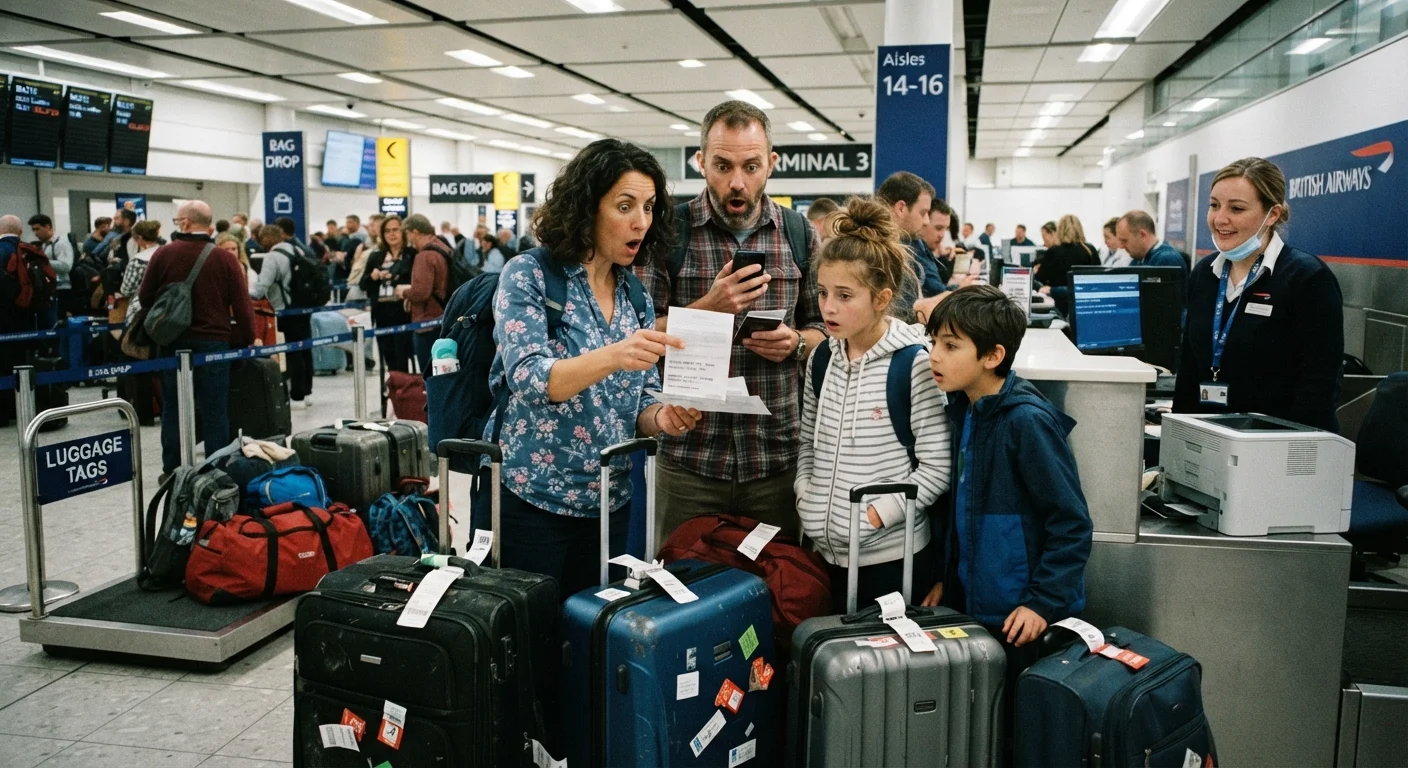
Budgeting for baggage without accounting for the actual airline's fee structure for your family's bag count.
Why it happens: Baggage fees vary widely by carrier and fare class, and families assume the fee they remember from a previous trip applies to the current one.
Underestimating the cost of eating at theme parks, attractions, and airports.
Why it happens: Families plan for sit-down dinners but do not budget for mid-day snacks, drinks, and quick-service meals inside venues where outside food is restricted.
Missing that national park entrance fees and site-specific parking charges apply per vehicle, per visit.
Why it happens: Families see headline entrance fees quoted as low, then encounter separate parking charges, shuttle fees, or timed-entry reservation costs that were not part of the original quote.
Skipping travel insurance and then absorbing the full cost of a cancelled or interrupted trip.
Why it happens: Insurance feels like an optional extra when everything looks set to go smoothly, and families cut it to reduce the upfront cost.
How to build a budget that holds
The most reliable approach is to build your travel budget in two passes. The first pass captures the obvious costs: transportation, lodging, and planned activities. The second pass goes through every vendor's fee schedule line by line, adds ground transportation at the destination, and prices out meals for each day including airport food, which routinely runs two to three times the price of a sit-down restaurant elsewhere.
For road trips, the same two-pass method applies. Fuel and highway food stops are easy to underestimate over multiple days. The strategies that actually keep road trip costs down come down to planning stops in advance rather than reacting to hunger and low fuel gauges.
If you are weighing a resort package against building your own itinerary, the fee picture changes significantly depending on the structure. The tradeoffs between all-inclusive and build-your-own vacations are worth understanding before you assume one type is automatically cheaper.
After both passes, add 10 to 15 percent to the total as a buffer. This is not an emergency fund; it is a realistic acknowledgment that a family of four will face at least one unplanned purchase per day. Families who skip this buffer tend to pull from it anyway and call it overspending. Families who build it in call it a normal trip.
$100+
Typical daily resort fee at many U.S. beach and city hotels
Resort fees at popular U.S. destinations can run from around $30 to over $100 per night on top of the advertised room rate, according to consumer reporting on hotel fee disclosures.
$200+
Round-trip baggage fees for a family of four on a budget carrier
With fees ranging from roughly $35 to $65 per checked bag each way on many U.S. carriers, a family checking two bags can spend $140 to $260 before boarding.
10-15%
Recommended budget buffer for unexpected trip costs
Travel planning resources consistently suggest adding at least 10 percent to a finalized trip budget to absorb minor unplanned expenses that accumulate daily.