
Why 'eating healthy' doesn't have to mean spending more
The idea that nutritious food is inherently expensive is one of the most persistent barriers families face. In reality, many of the foods with the strongest evidence behind them are also among the most affordable items in any grocery store. Dried beans, oats, eggs, frozen vegetables, and brown rice have appeared in dietary guidance from public health bodies for decades, and none of them carry a premium price.
The problem is that wellness culture has conflated nutrition with novelty. Expensive powders, trendy oils, and imported berries get marketed as necessary, while staples that genuinely support health are overlooked. This article focuses on the dietary principles that actually hold up under scrutiny, and that work within a real family budget.
This article provides general nutrition information for educational purposes and is not a substitute for advice from a registered dietitian or qualified healthcare professional. Individuals with specific health conditions or dietary needs should consult a professional before making significant changes to their eating habits.
Core principles for budget-friendly whole-food eating
Build meals around legumes and whole grains as your primary protein and carbohydrate sources.
Legumes and whole grains together provide complete or near-complete protein profiles, substantial dietary fiber, and a wide range of micronutrients. These food groups are consistently supported by dietary research as protective against chronic disease. Per serving, they cost a fraction of animal proteins and most processed alternatives.
Use frozen and canned vegetables freely, treating them as nutritional equals to fresh.
Freezing and canning preserve most vitamins and minerals, sometimes better than fresh produce that has traveled long distances or sat on a shelf. The nutritional difference between frozen and fresh spinach, for example, is generally small. Accepting this removes the pressure to buy expensive out-of-season produce.
Plan a weekly menu before shopping and write a precise list based only on what you need.
Unplanned grocery shopping is the primary driver of food waste and impulse spending. When families enter a store without a plan, they tend to overbuy perishables and purchase items that don't combine into complete meals. A written list built around planned meals reduces both waste and overspending.
Limit ultra-processed foods rather than specific nutrients or macronutrient groups.
Research published in journals including The BMJ and The Lancet consistently links high consumption of ultra-processed foods to poorer health outcomes, independent of calorie or fat content. Whole and minimally processed foods tend to provide better satiety and more micronutrients per calorie. This principle is simpler to apply than tracking individual nutrients.
Cook in batches and repurpose components across multiple meals during the week.
Batch cooking reduces time, energy use, and the likelihood of turning to convenience foods on busy nights. A single large pot of cooked grains or beans can serve as the base for three or four different meals, multiplying the value of both the ingredient and the effort.
Where to put your grocery dollars first
When money is tight, sequence matters. Some food categories deliver more nutrition per dollar than others, and knowing where to concentrate spending helps families avoid common budget traps.
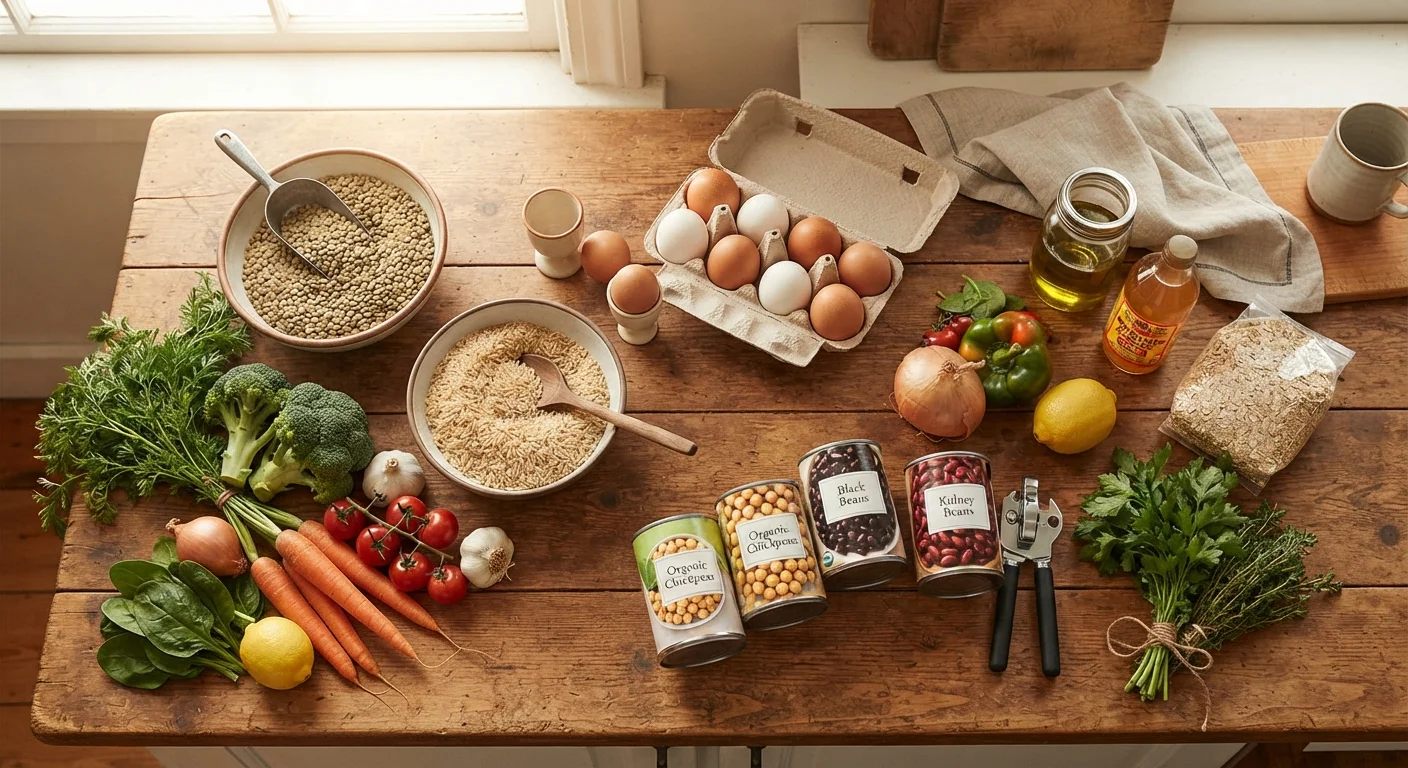
Legumes (lentils, chickpeas, kidney beans, black beans) sit at the top of the value list. They supply protein, fiber, iron, and B vitamins at a fraction of the cost of meat. Dried versions cost less per serving than canned, though canned beans with no added sodium are a practical, time-saving alternative.
Eggs are one of the most nutrient-dense affordable foods available. They contain complete protein along with choline, vitamins D and B12, and healthy fats. Frozen vegetables preserve most of their nutritional content because they are typically processed shortly after harvest, and they cost considerably less than fresh out-of-season produce.
Oats, brown rice, and whole wheat bread round out a low-cost foundation. These foods provide dietary fiber, which most American adults consume well below recommended levels according to the Dietary Guidelines for Americans.
For more on where food costs fit within household spending, see how a typical family budget breaks down. And if grocery spending keeps running over, hidden grocery spending patterns are worth reviewing.
Quick actions that make a real difference
These habits are straightforward to start and do not require new equipment, specialty stores, or a larger food budget. Many families find that applying even two or three of them produces a noticeable shift in both grocery costs and the variety of nutrients in their weekly meals.
For a broader look at low-cost health habits, the family health reference on evidence-backed habits covers sleep, activity, and other areas beyond food. If you are building a routine that includes nutrition alongside other wellness goals, building a family wellness routine without extra spending outlines a practical starting framework.